The Ningaloo Region for Birders
The Ningaloo Coast is far better known for its whale sharks and coral reef than for its birds — yet for those who look beyond the water's edge, this remote corner of Western Australia reveals itself as one of the continent's most rewarding birding destinations. Spanning nearly 300 kilometres of coastline between Red Bluff in the south and the Muiron Islands to the north, the region encompasses a remarkable variety of habitats compressed into a relatively compact area.
To the west, the Ningaloo Reef Marine Park shelters seabirds and coastal specialists. At the reef's edge, mangrove-fringed creeks and tidal mudflats attract waders and herons. The limestone ranges of Cape Range National Park provide shelter for arid-zone species, their gorges channelling the rare rains that bring finches and chats to drink. And stretching inland, the vast red spinifex plains host an entirely different suite of birds adapted to one of the driest landscapes on Earth.
Ornithologists have recorded over 180 bird species across the Exmouth Gulf and Ningaloo region. The list below covers the most reliably encountered, organised by the habitat where you're most likely to find them.
"The Ningaloo region compresses an extraordinary range of habitats into a single landscape — in a single morning, you can move from open ocean seabirds to arid-zone spinifexbirds without ever driving more than an hour."
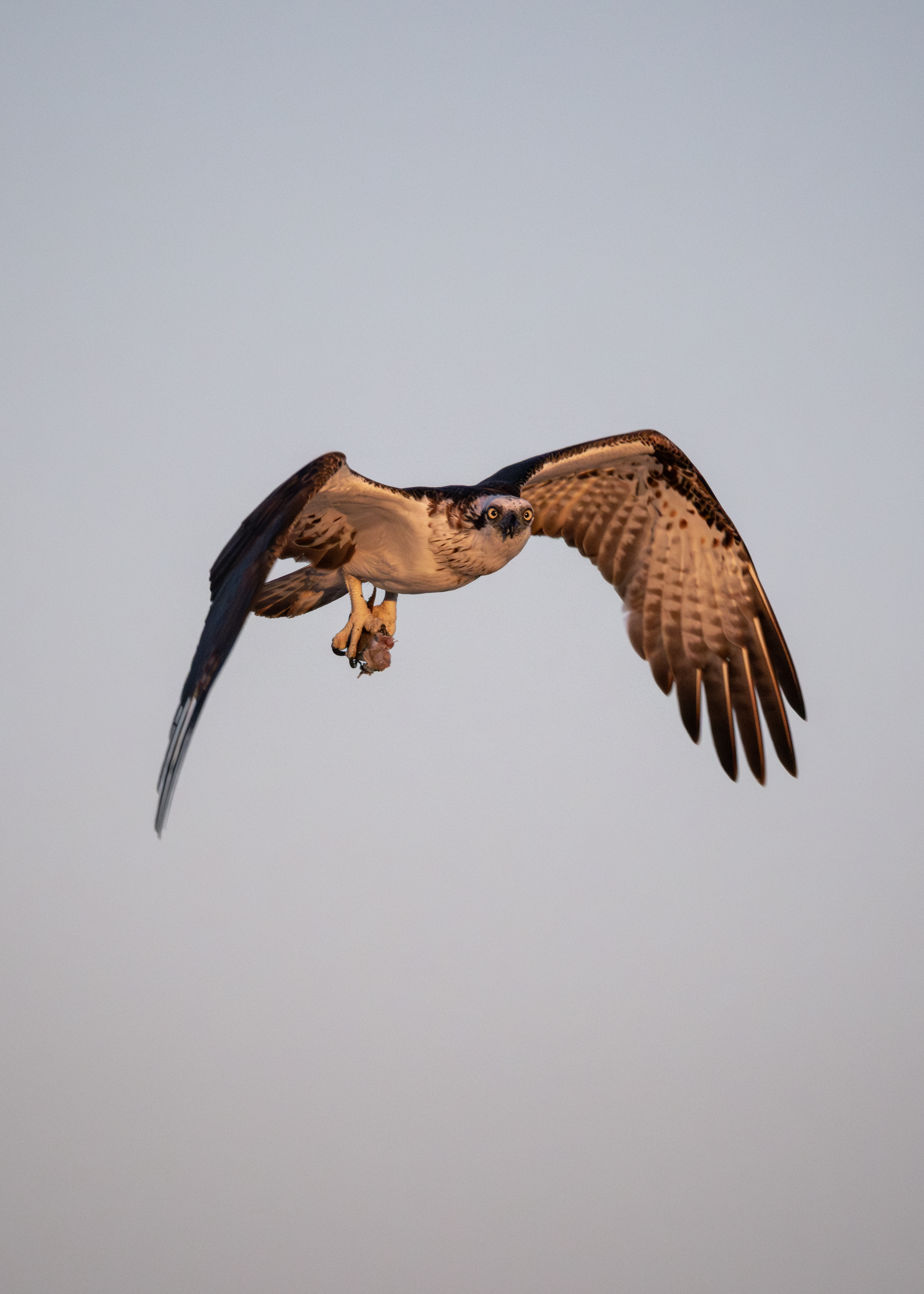
Osprey (Pandion cristatus) — one of the Ningaloo Coast's most iconic birds. Photo: Justin Bumpstead
Raptors & Birds of Prey
The Ningaloo Coast is exceptional raptor country. The combination of productive marine waters, vast arid plains, and the Cape Range gorge system supports a diverse suite of diurnal raptors. Scanning fence posts along Minilya-Exmouth Road or the ridgelines above Yardie Creek will often reveal multiple species within a short distance.
The Osprey is perhaps the region's signature bird — a near-constant presence along the coast, plunge-diving for fish in the shallow lagoons behind the reef. Nesting pairs are highly visible year-round on artificial platforms, navigation markers, and exposed cliff ledges. The White-bellied Sea Eagle shares similar coastal habitat, though it is less numerous and more often seen soaring at altitude. Both species frequently occur together at productive fishing grounds around Exmouth Gulf.
Inland, the Wedge-tailed Eagle is the dominant large raptor, with resident pairs holding territories across the pastoral plains. The Brahminy Kite — stunning in its chestnut and white plumage — is common around mangroves, boat ramps, and fish-cleaning areas. The smaller Whistling Kite is similarly widespread, often seen in loose flocks over open country.
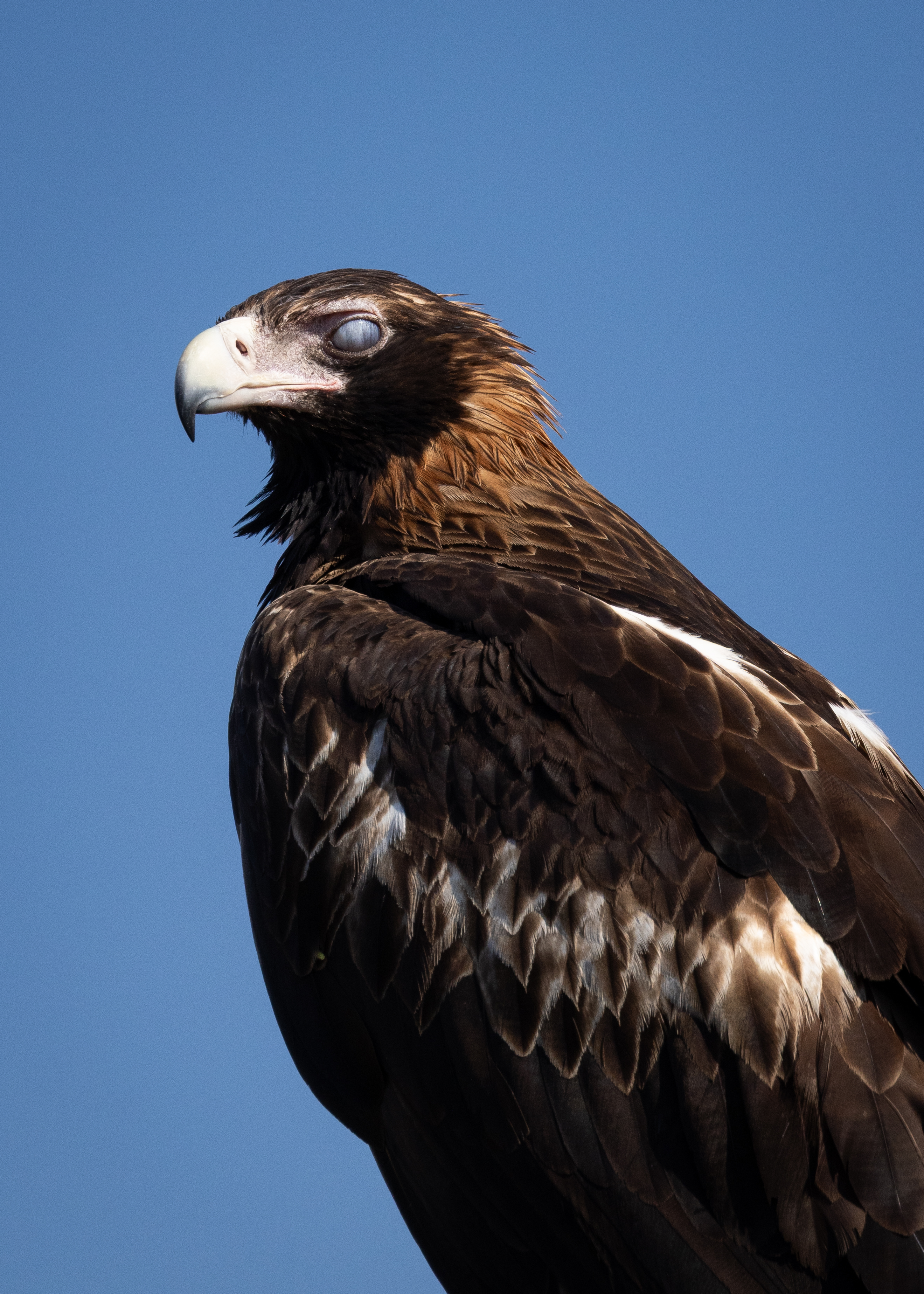
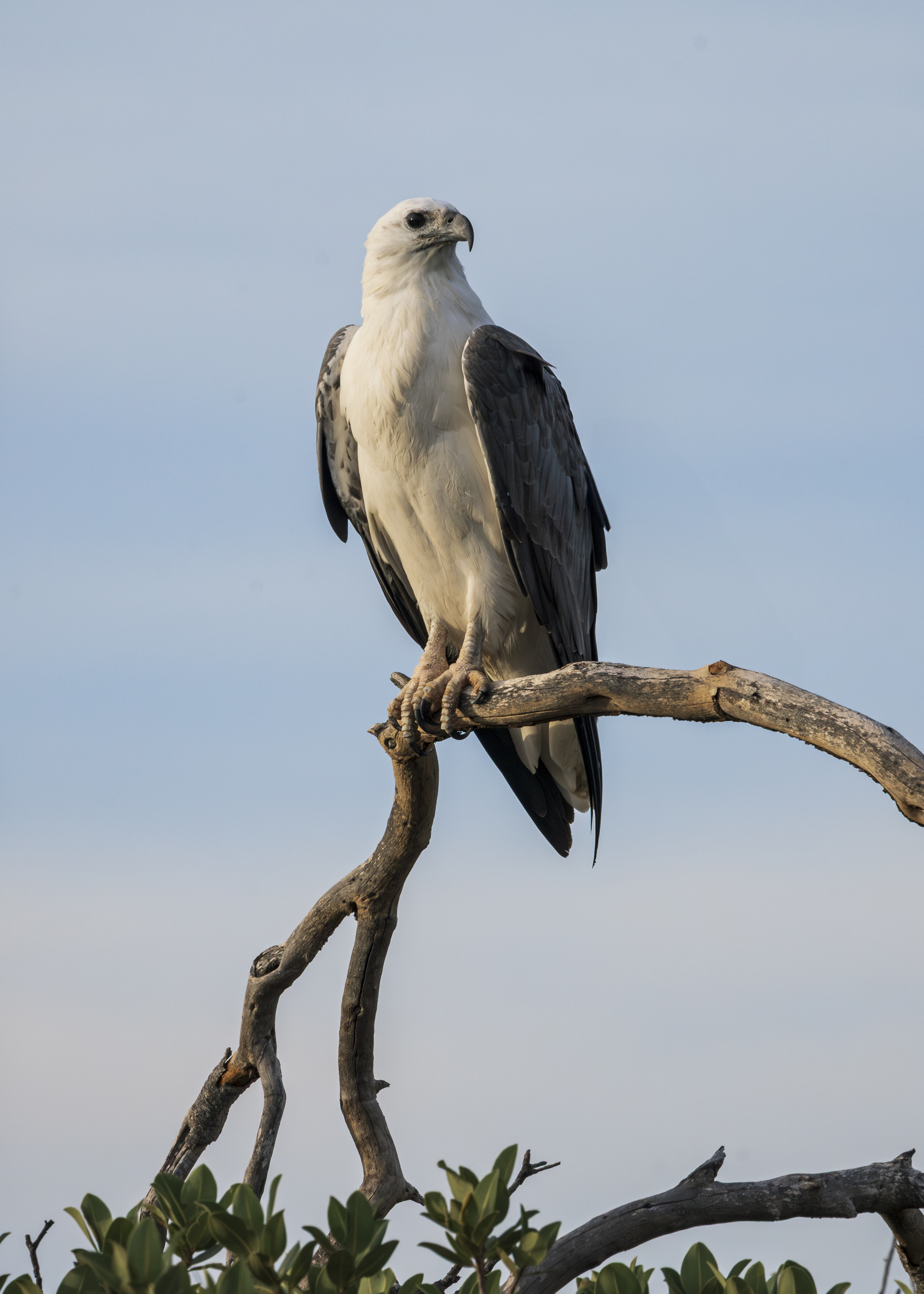
Left: Wedge-tailed Eagle (Aquila audax) · Right: White-bellied Sea Eagle (Icthyophaga leucogaster). Photos: Justin Bumpstead
Seabirds of the Ningaloo Reef
The outer reef and offshore waters of the Ningaloo Marine Park support a healthy seabird community, most easily observed from the beach at Point Murat, Bundegi Reef, or from a boat heading offshore. The Muiron Islands serve as important nesting sites for boobies, terns, and frigatebirds.
The Lesser Frigatebird is a regular and spectacular presence, its long angular wings and forked tail making it unmistakeable as it pirates fish from gulls and terns over the lagoon. The Brown Booby is a confirmed breeder on the Muiron Islands, nesting on the ground in good numbers. The Red-footed Booby — occurring in both white and brown morphs — is an occasional visitor to offshore waters. Tern diversity is high during the summer months, with Bridled, Sooty, Roseate, and Black-naped terns all possible on pelagic trips.
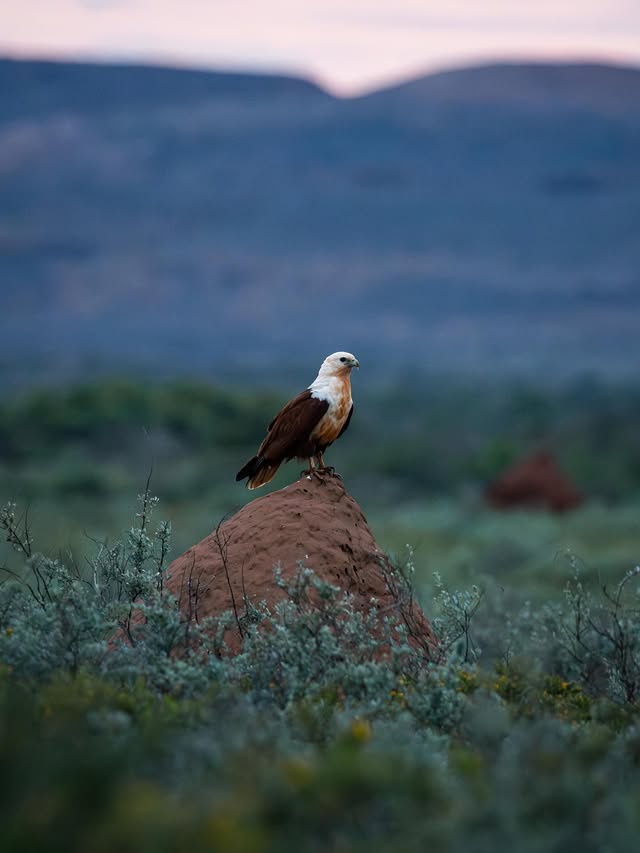
Brahminy Kite (Haliastur indus) — a regular sight over mangroves and coastal waters. Photo: Justin Bumpstead
Coastal & Estuarine Waterbirds
The mangrove systems of the Exmouth Gulf are among the most southerly on the Indian Ocean coast of Western Australia, and they support a characteristic community of herons, egrets, cormorants, and waders. The Learmonth Boat Ramp area and the mangrove-lined creeks south of Exmouth town are productive sites. Pelicans are a constant presence wherever fish can be found, and the striking Eastern Reef Egret — occurring in both slate-grey and white morphs — stalks the reef's edge at low tide.
The saline mudflats along the eastern shore of Exmouth Gulf, particularly around Learmonth and Giralia, attract impressive concentrations of waterbirds during the dry season. Banded Stilts and Red-necked Avocets gather in large flocks when conditions are right, and the Australian Pelican is a common year-round fixture.
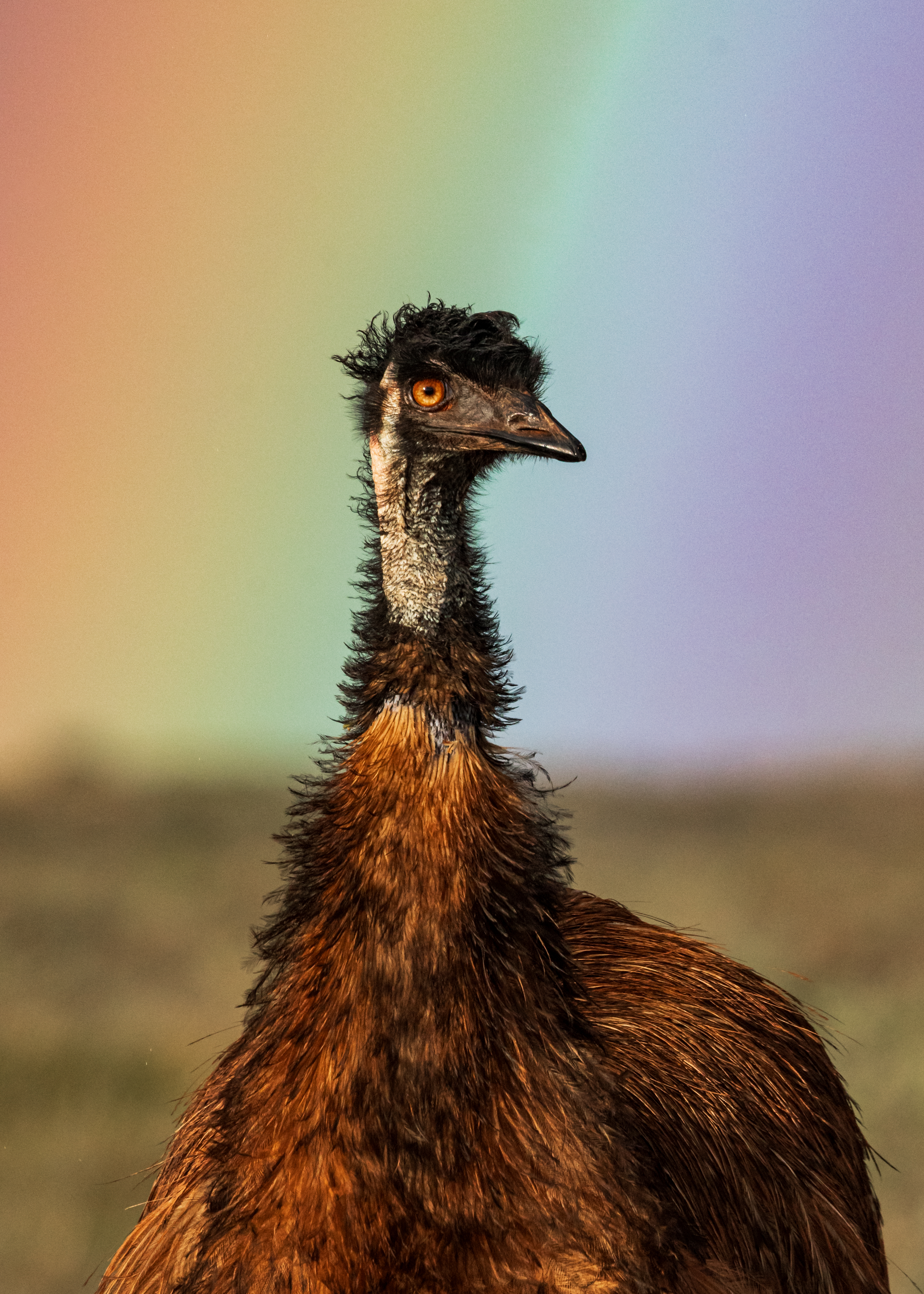
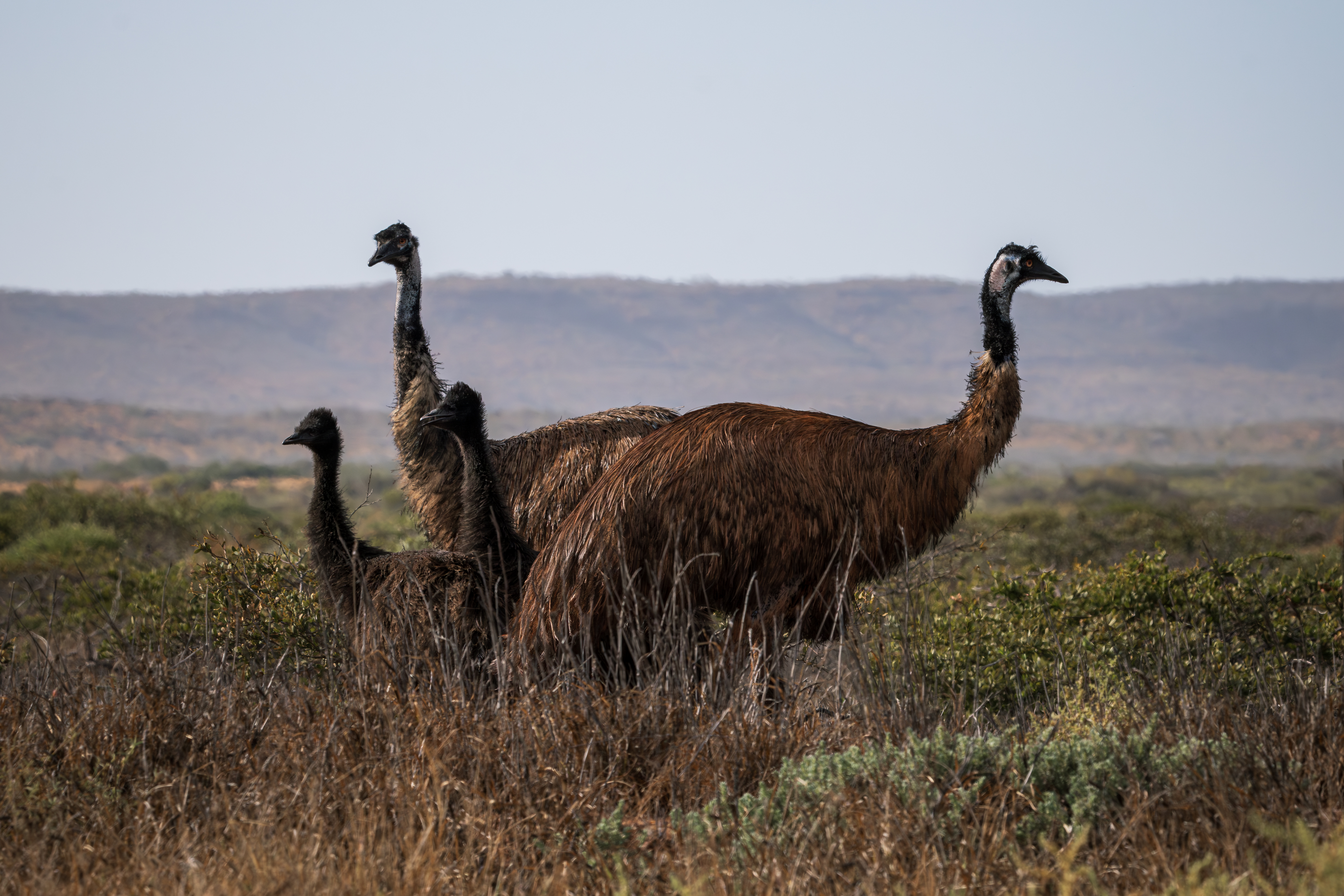
Emus (Dromaius novaehollandiae) — resident year-round through Cape Range and the surrounding plains. Photos: Justin Bumpstead
Migratory Shorebirds
The Exmouth Gulf is recognised as a wetland of national importance for migratory shorebirds, providing critical non-breeding habitat for species that breed in the Arctic and sub-Arctic each northern summer. The mudflats and sandflats of the gulf's eastern shore are most productive between October and April, when tens of thousands of waders congregate to feed on the invertebrate-rich sediments.
The Bar-tailed Godwit is among the most impressive — as a species they hold the Guinness World Record for the longest non-stop migration of any bird (over 13,500 km from Alaska to Tasmania, set in 2022), and the birds reaching Ningaloo are thought to fly from breeding grounds in north-east Siberia, arriving exhausted but recovering rapidly on Exmouth's tidal flats. The Red-necked Stint arrives in the greatest numbers, often in flocks of hundreds on the upper mudflats. The large Eastern Curlew — Australia's largest migratory shorebird and critically endangered in Australia — is a regular visitor, most often seen probing the mud at the waterline with its dramatically curved bill.
Shorebird Identification Tips
- Visit on a falling tide — birds concentrate as the mudflat is exposed
- Most migratory waders will be in non-breeding (grey/white) plumage on arrival
- Scan for size variation within flocks — larger birds are often different species
- Bill shape and leg colour are the quickest identification guides
Arid Zone & Spinifex Species
Beyond the coastal strip lies a landscape of red earth and golden spinifex — vast, ancient, and alive with birds that have adapted to survive in one of the harshest environments on the planet. This is some of Australia's finest arid-zone birding, and species that are difficult to find elsewhere can be encountered here with some patience and local knowledge.
The Emu — Australia's largest bird — is a regular sight on the roads south of Exmouth and through Cape Range, sometimes in small family groups with striped chicks in tow. Finches are a particular highlight of the region's arid zone: Zebra Finches are ever-present around water sources, while the exquisite Painted Finch, with its brilliant crimson face and flanks, is found in rocky gorge country. Budgerigars can appear in staggering flocks — hundreds or even thousands of birds moving nomadically across the plains following rainfall.
The Spinifex Pigeon — a plump, rust-and-white pigeon with an extravagant erect crest — walks along the gravel roads and rocky scree slopes of Cape Range. The pigeon is remarkably confiding and a favourite photographic subject. Look also for the Bourke's Parrot at dawn and dusk, when these soft pink-and-brown birds visit waterholes and drainage lines.
Woodland, Mulga & Scrub Species
The acacia shrublands and mulga woodlands of the Cape Range hinterland, along with the narrow gorge systems of the national park itself, support a rich community of songbirds, honeyeaters, and insect-eaters. Dawn in the gorges — particularly at Yardie Creek or Shothole Canyon — is an experience not easily forgotten: the still air carries the calls of dozens of species in the half-light before sunrise.
The Rainbow Bee-eater is one of the most vivid birds in the region — jewel-green with a black mask and rufous crown, it perches on low branches and telephone wires before sallying after insects in graceful arcs. It is partly migratory, most numerous between August and April. The White-winged Fairywren — the male an electric blue-and-white confection — is a particular speciality of the Ningaloo region's coastal scrub, where small family parties move through the low shrubs in constant animated motion.
Honeyeaters are well represented: the Singing Honeyeater is ubiquitous, while the White-fronted Honeyeater and Spiny-cheeked Honeyeater are regular in flowering acacias. The distinctive Red-backed Kingfisher replaces the more familiar Sacred Kingfisher in the arid interior, nesting in earth banks along creek lines.
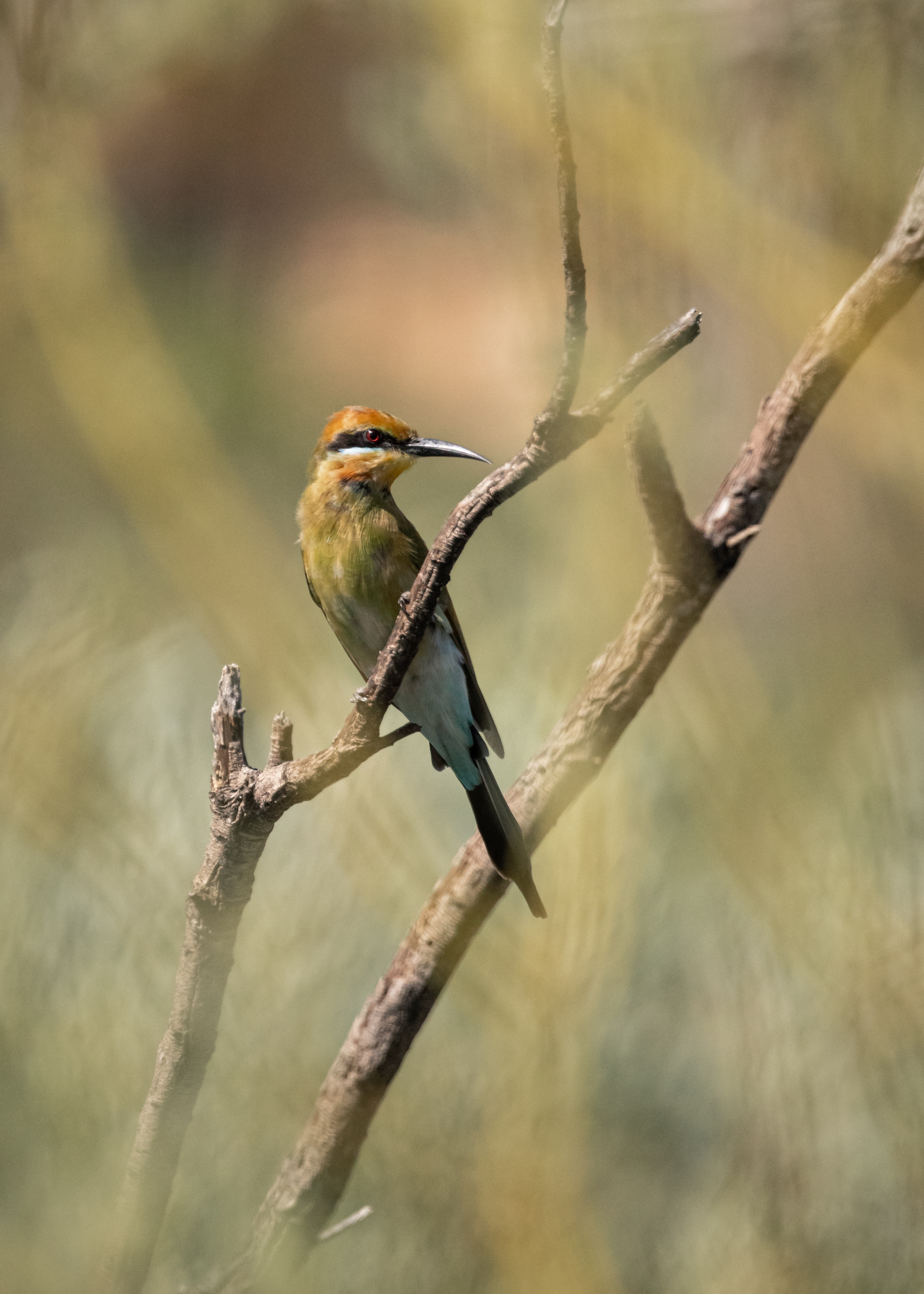
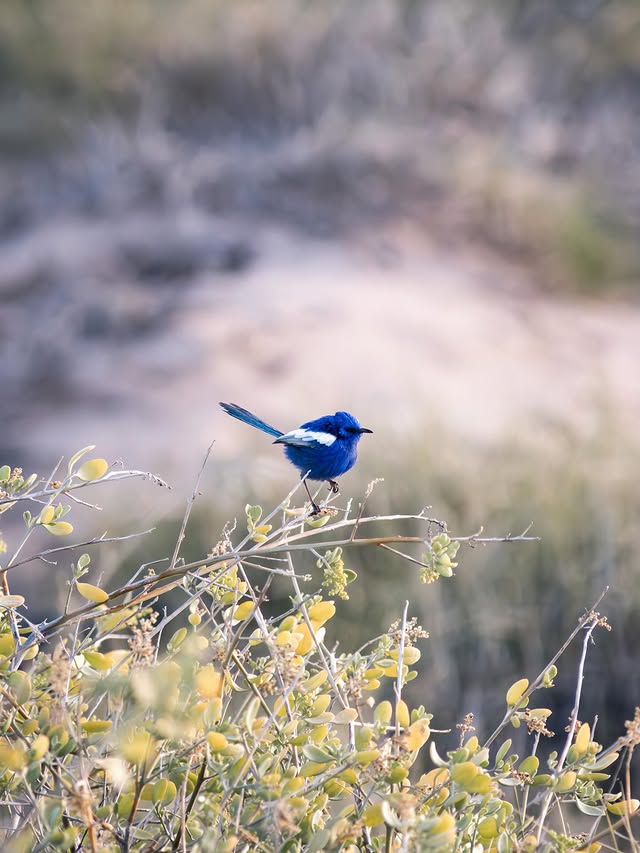
Left: Rainbow Bee-eater (Merops ornatus) · Right: White-winged Fairywren (Malurus leucopterus). Photos: Justin Bumpstead
When to Visit
The Ningaloo region has a pronounced dry season (April–October) and a hot, humid wet season (November–March). Both periods have their birding merits.
April – October (Dry Season) — Recommended
- Temperatures: 20–32°C, comfortable for extended time outdoors
- Raptors highly active — Ospreys nesting, eagles soaring on thermals
- Shorebirds present from October through April, peaking in summer
- Rainbow Bee-eater arrives in August; most woodland species active
- Best months overall: May, June, July, August, September
November – March (Wet Season)
- Temperatures 35–45°C; early starts (pre-dawn) essential
- Migratory shorebirds at peak numbers on Exmouth Gulf mudflats
- Rainfall triggers movement of nomadic finches, chats, and parrots inland
- Seabirds most active offshore — tern and booby breeding activity
- Post-rain conditions can produce spectacular concentrations of arid-zone birds
Best Birding Spots
The following sites consistently produce the most species and are accessible to independent visitors. Many are within 30–60 minutes of Exmouth town.
Top Birding Locations Near Exmouth
- Yardie Creek, Cape Range NP — Gorge walk for raptors, kingfishers, Spinifex Pigeons; boat cruise for rock wallabies and herons
- Bundegi Beach & Reef — Seabirds, Ospreys nesting on navigation markers; Brahminy Kites common
- Learmonth Solar Observatory Road — Shorebird mudflats along Exmouth Gulf; excellent for godwits and stints in season
- Milyering (Cape Range NP) — Visitor centre gardens attract honeyeaters and fairywrens; spinifex scrub behind for Painted Finch
- Shothole Canyon — Raptor soaring; Peregrine Falcons nest on cliff faces; gorge species including Rufous Whistler
- Coral Bay surrounds — Reef channel for Ospreys and Sea Eagles; salt flats south of town for shorebirds and Banded Stilts
- Minilya–Exmouth Road — Drive at dawn for Wedge-tailed Eagles, Brown Falcons, and roadside arid-zone species
- Point Murat Whale Shark Bay — Frigatebirds and terns offshore; Reef Egrets on the fringing rocks
"The gorges of Cape Range are worth visiting at first light even if you see nothing rare — the quality of the light, the silence, and the sheer remoteness make every bird encountered feel like a gift."
Guided Tours · Ningaloo Coast
See These Birds
with a Local Expert
Ningaloo Birding Safaris offers small-group birding tours and photography workshops across the habitats described in this guide — led by passionate local naturalists who know exactly where to look.
Book a Safari